The Fortingall Yew: Discover one of Europe’s oldest trees in Highland Perthshire
Hidden within a quiet churchyard in the Highland Perthshire village of Fortingall stands a tree that was already ancient long before much of Scotland’s recorded history began.
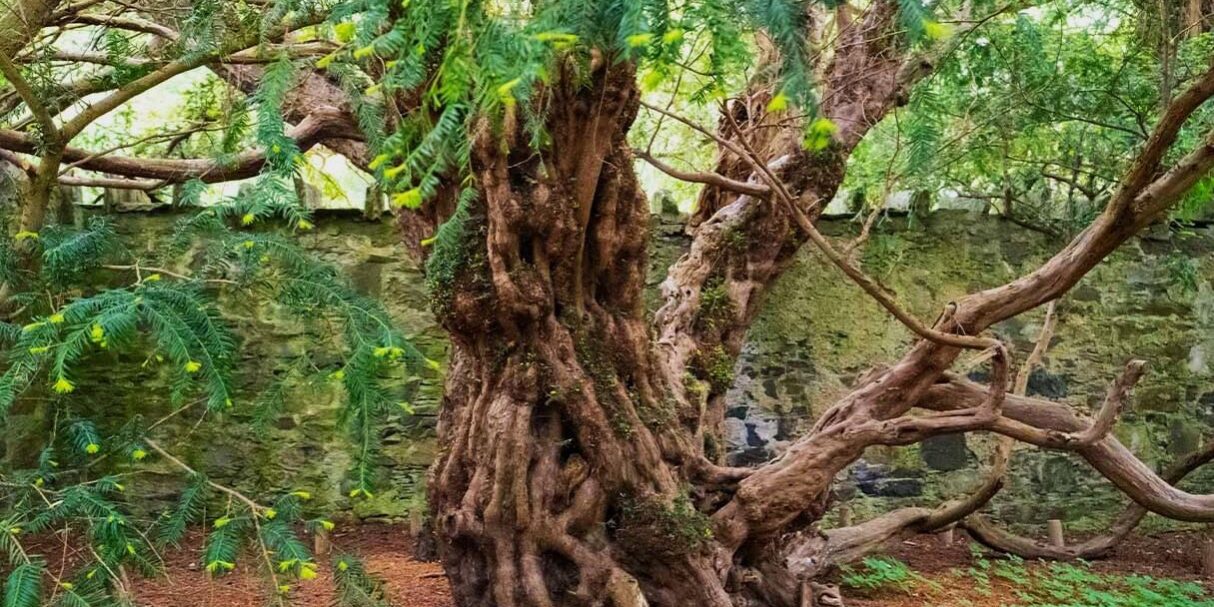
The Fortingall Yew is believed to be several thousand years old, making it one of the oldest trees in Britain and possibly one of the oldest living trees in Europe. Estimates of its age vary considerably – from around 3,000 years to as much as 9,000 – although it is often described as being up to 5,000 years old.
Whatever its exact age, there is no question that this remarkable tree has witnessed an extraordinary span of human history!
Where is the Fortingall Yew?
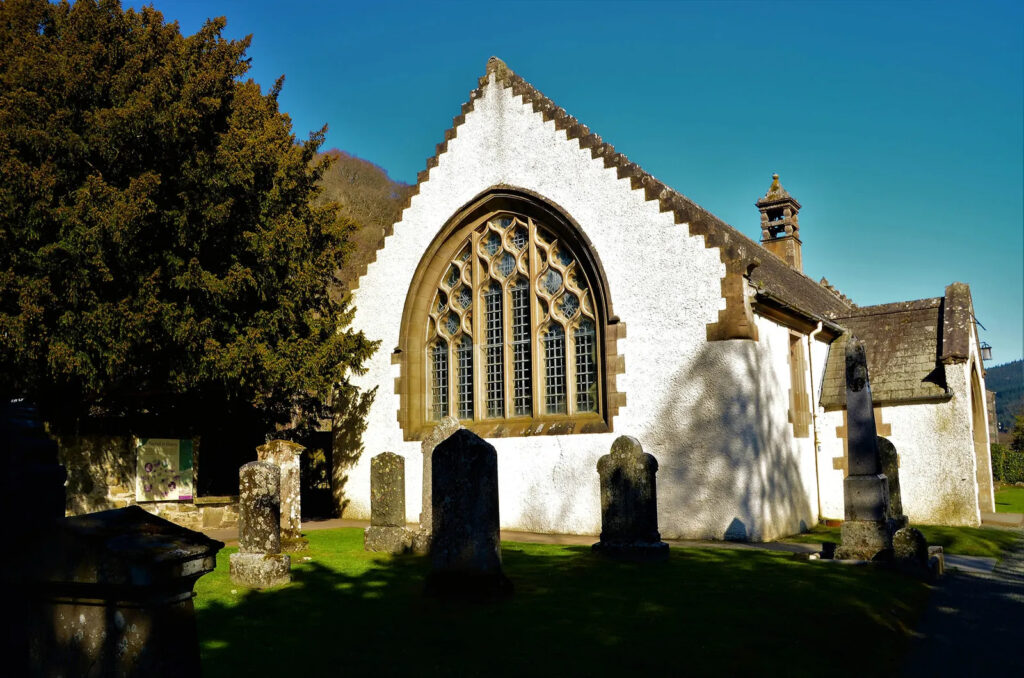
The tree grows in the churchyard of Fortingall Parish Church, close to the entrance to Glen Lyon. Surrounded by the mountains, forests and farmland of Highland Perthshire, Fortingall is a peaceful village around two hours by car from Edinburgh.
The yew stands within a low protective enclosure in the churchyard. It may no longer have the appearance of one enormous tree, but its gnarled trunks and spreading branches reveal its immense age – and give it an atmosphere unlike almost any other tree in Scotland.
A sacred tree with an ancient past
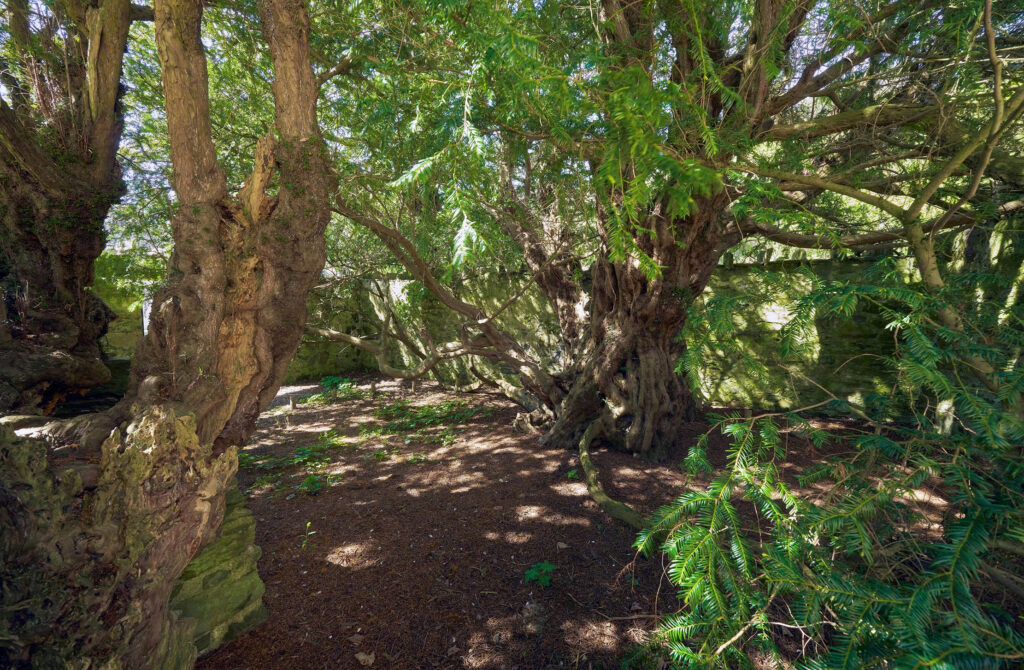
Yew trees have long been associated with sacred places, death and renewal. Their ability to regenerate and continue growing for thousands of years made them powerful symbols of endurance and eternal life.
The Fortingall Yew is thought to have been significant to people living in the area long before the arrival of Christianity. Fortingall itself has ancient origins, and the site later became an important early Christian centre. The churchyard that surrounds the tree today continues a connection between this place, worship and community that stretches back for centuries.
While it is impossible to know exactly what ceremonies or gatherings may once have taken place beneath its branches, the tree’s location suggests that it remained a focal point as beliefs and traditions changed around it.
Why is its age so difficult to determine?
Dating an ancient yew is surprisingly complicated. The usual method of counting growth rings does not work when the oldest wood at the centre of the tree has decayed and disappeared.
When the Fortingall Yew was measured in 1769, its enormous trunk had a girth of almost 16 metres, or 52 feet. Over time, the central heartwood decayed and the once-massive trunk separated into several distinct stems. This is a natural part of the ageing process in very old yews, but it means that the rings needed to calculate the tree’s exact age no longer survive.
For this reason, its age remains an estimate. Some experts place it at around 3,000 years old, while others have suggested it could be closer to 5,000. The most dramatic estimates extend to 9,000 years, although these are much harder to substantiate.
Even at the lower end of the estimates, the Fortingall Yew was growing centuries before the Romans arrived in Britain.
The tree that surprised botanists
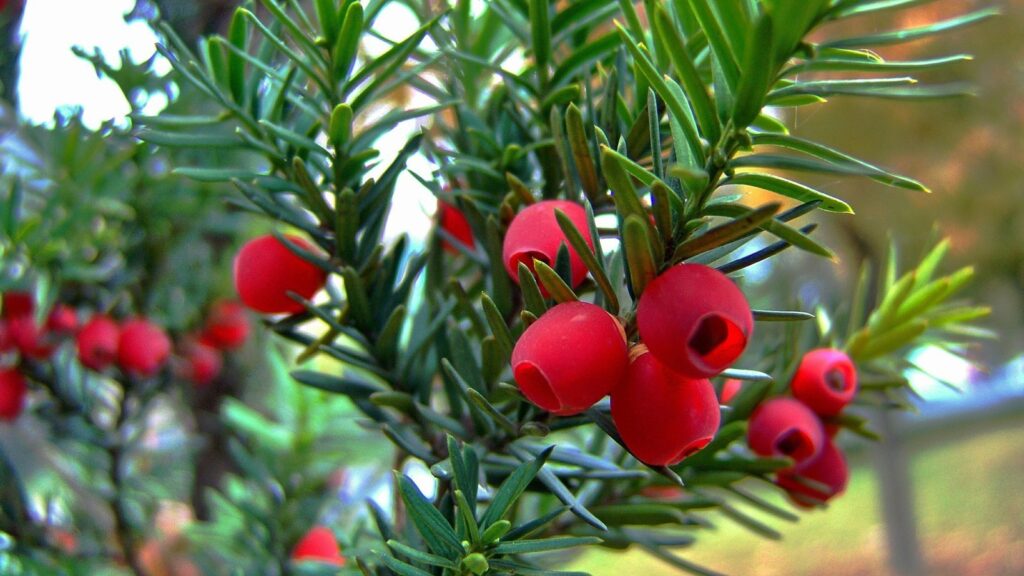
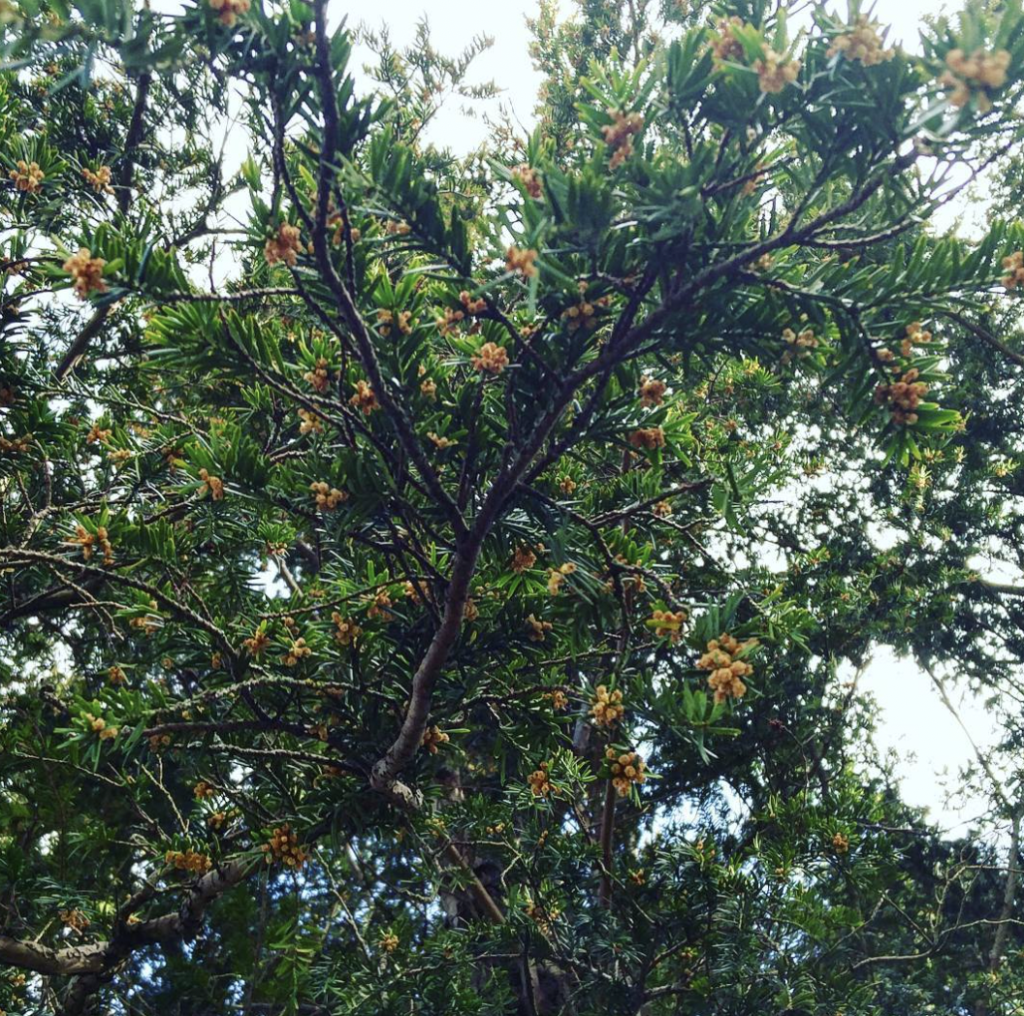
The Fortingall Yew has another fascinating story. Yews generally grow as either male or female trees: male trees produce pollen, while female trees produce the familiar red, berry-like fruits.
The Fortingall Yew had long been identified as male. However, botanists from the Royal Botanic Garden Edinburgh discovered that one small branch had begun producing fruit – a rare example of part of a yew apparently changing sex. The rest of the tree continued to behave as male, making the discovery an intriguing reminder that, even after thousands of years, this ancient tree can still surprise us.
How to Visit the Fortingall Yew
The Fortingall Yew is easy to find and completely free to visit. It stands within the churchyard in the centre of Fortingall.
Although Fortingall feels wonderfully secluded, it is within easy reach of several popular Highland Perthshire destinations. The village lies close to Kenmore and Loch Tay, while Aberfeldy is the nearest main town. Pitlochry is approximately 22 miles away, although the journey takes longer than the distance might suggest due to the winding rural roads. The scenic drive is all part of the experience, passing through some of Perthshire’s most beautiful countryside.