Comrie and Perthshire: Discover Scotland’s Big Tree Country
Perthshire is famous for its lochs, mountains and picturesque villages, but it is also home to some of Britain’s most impressive trees. With more than 200,000 acres of woodland and more champion trees than any other part of the UK, it is easy to see why Perthshire has earned the name Big Tree Country. A champion tree is one recognised as an outstanding example of its species, usually because of its height, age or enormous trunk.
From ancient yews and native Scots pines to towering Douglas firs and giant redwoods, Perthshire’s trees are an important part of the region’s landscape, and Comrie is a wonderful place from which to explore them.
Why Is Perthshire called ‘Big Tree Country’?
Perthshire’s sheltered glens, fertile river valleys and generous rainfall create excellent conditions for trees. During the 18th and 19th centuries, local landowners also planted new species brought back by Scottish plant hunters travelling through North America, Asia and other parts of the world.
These introduced trees joined Perthshire’s native oak, birch, rowan, pine and hazel woodlands. Over time, many grew to remarkable sizes, creating the varied forests, designed landscapes and wooded estates that can still be explored today.
Perthshire now has one of the most important collections of notable trees in Britain. The Perth and Kinross Countryside Trust has brought together many of the region’s best woodland destinations as part of Perthshire Big Tree Country.
Walk Beneath Towering Trees
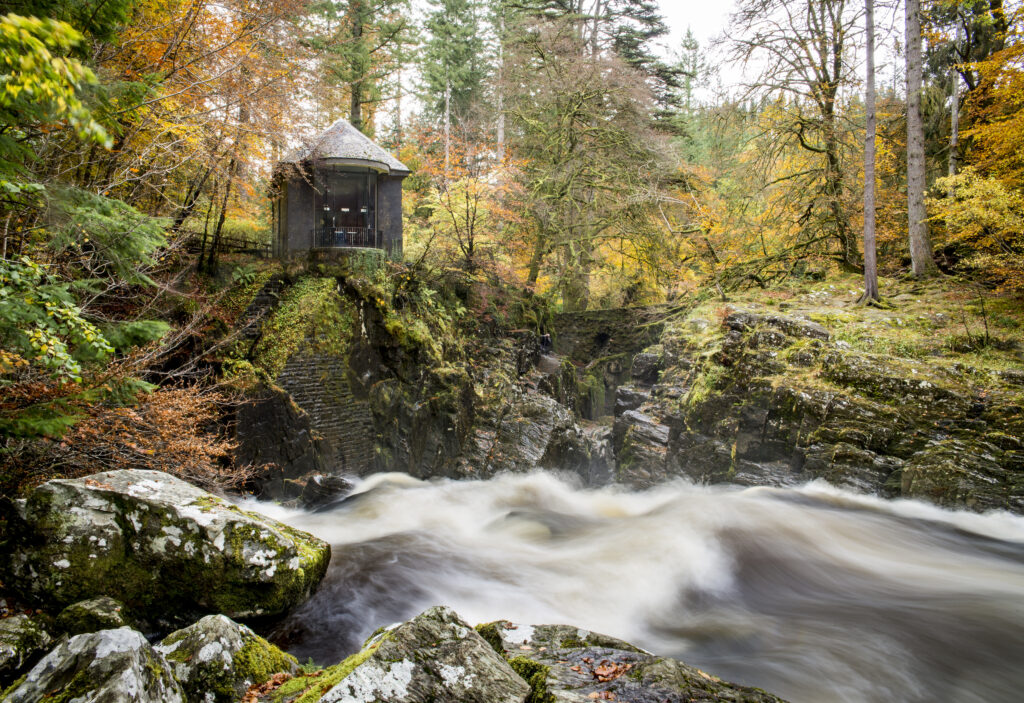
The Hermitage is home to some of Britain’s tallest trees, including enormous Douglas firs that rise high above the woodland paths. Walking beneath them creates a wonderful sense of scale, particularly when sunlight filters through the colourful autumn canopy.
A network of paths leads through the forest, allowing visitors to enjoy its most impressive sights without taking on a long or difficult hike. It is an ideal place for a leisurely woodland stroll, a family outing or a photography trip.
Woodland walks around Comrie

Comrie also has a wider network of paths ranging from short, relatively level routes to longer hill walks. The Comrie Path Network includes six suggested routes of between two and six miles, making it possible to explore the area on foot whatever your ability or available time.
As woodland paths can occasionally be affected by storms, fallen trees or maintenance work, it is worth checking current local information before setting out.
Glen Lednock and the Deil’s Cauldron

One of the best-known local walks follows the River Lednock into Glen Lednock. The path passes through a mixture of deciduous and coniferous woodland on its way towards the Deil’s Cauldron, where the river has carved a dramatic waterfall and rocky gorge.
This is an especially beautiful walk during autumn, when the woodland turns shades of yellow, copper and red. In spring and summer, the same paths are green and shaded, with mosses and ferns flourishing beside the water.
Explore the Woods at Comrie Croft

Comrie Croft offers another way to experience the Perthshire landscape. Its 231 acres include wild woodland, meadows, waterfalls and trails for walking and mountain biking.
The trails range from gentle woodland sections to more challenging terrain, allowing both beginners and experienced riders to explore the forest. Bikes can be hired on site, while walkers can simply enjoy the paths and the changing scenery.
The Birnam Oak

The veteran Birnam Oak stands beside the River Tay and is associated with Birnam Wood, made famous by Shakespeare’s Macbeth. Its huge spreading branches are now supported by wooden props, but the tree remains a remarkable link between Perthshire’s natural landscape, local history and literature.
Faskally Wood in Pitlochry

Close to Pitlochry, Faskally Wood contains a beautiful mixture of native and introduced species planted during the 19th century. Paths wind between tall trees and around a small loch, making it an easy woodland destination for families and casual walkers.
The best autumn colours usually appear between late September and early November, although the exact timing depends on the weather. Visiting during October will often give you the best chance of seeing the woodland at its most colourful.
A dry, bright day is ideal for walking, but mist and light rain can give the forest an equally beautiful atmosphere. Sturdy footwear is recommended, as fallen leaves and wet woodland paths can become slippery.
Whether you come for the waterfalls, the giant trees or the autumn colours, The Hermitage deserves a place on any Perthshire itinerary. It offers some of Scotland’s most memorable woodland scenery – and you do not need to commit to a full day’s hike to experience it.