Bridges of Scotland: 10 iconic crossings where history meets engineering
The bridges in Scotland are far more than just a way to cross water – they are landmarks that tell the story of the country’s battles, trade, engineering achievements and changing way of life. From medieval stone crossings to world-famous feats of engineering, Scotland’s bridges have shaped how people travelled, traded and connected with one another.
The Forth Bridge
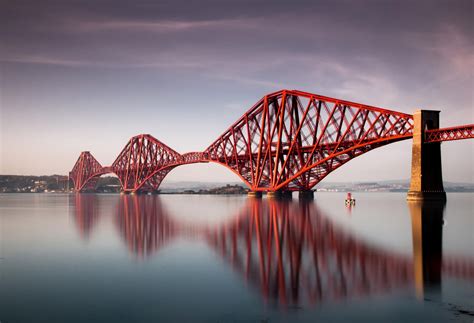
Why visit? This bridge is a world-famous landmark, incredible photography spot and one of Scotland’s greatest engineering achievements!
Arguably Scotland’s most famous bridge, the Forth Bridge is a masterpiece of Victorian engineering and a UNESCO World Heritage Site. Opened in 1890, this iconic red cantilever railway bridge stretches across the Firth of Forth and was once the longest single cantilever bridge span in the world!
The best views are from South Queensferry, where you can see all three Forth crossings together – the Forth Bridge, the Forth Road Bridge and the modern Queensferry Crossing.
Stirling Old Bridge
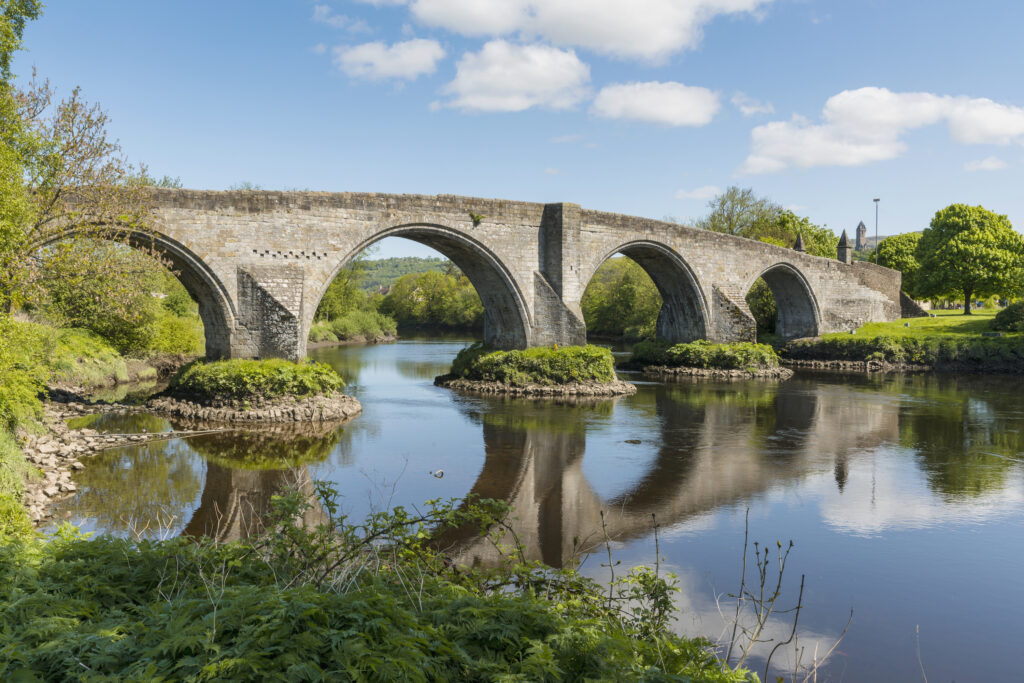
Why visit? Medieval architecture, Scottish history and one of the country’s most important battle sites.
One of Scotland’s most important historic bridges, Stirling Old Bridge dates from the late 1400s and stands close to the site of the original medieval crossing where the Battle of Stirling Bridge took place in 1297.
It was here that William Wallace and Andrew Moray defeated a much larger English army in one of Scotland’s most famous victories. Today, the stone bridge offers beautiful views towards Stirling Castle and the Wallace Monument.
Swilcan Bridge
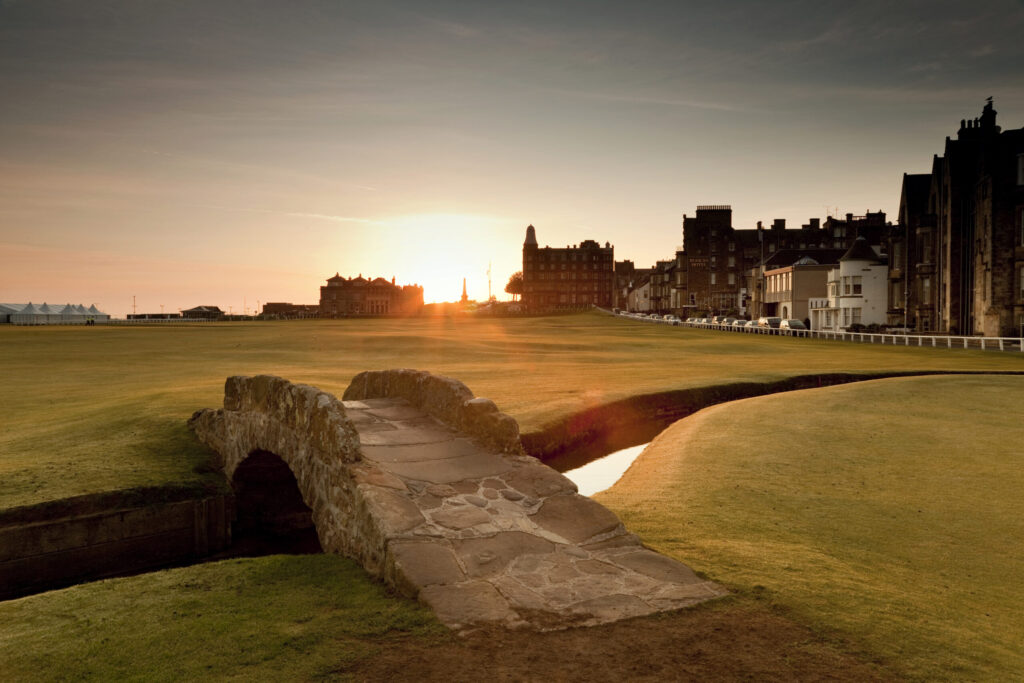
Why visit?
This humble stone bridge has become one of the most photographed spots in all of golf – a symbol of tradition, history, and the spirit of the game itself.
The Bridge of Dochart is one of Scotland’s most picturesque historic bridges, crossing the rushing Falls of Dochart in the heart of the village of Killin. Built from local stone, its distinctive winding shape follows the natural rocks beneath, creating a bridge that blends beautifully into the landscape rather than cutting across it.
Although parts of the bridge date back to the 18th and early 19th centuries, it has stood the test of time and remains a remarkable example of traditional Scottish engineering. With its four graceful arches spanning the tumbling river, it’s easy to see why the bridge has inspired artists, writers and visitors for generations.
Whether you’re stopping to admire the powerful waterfalls or simply soaking up the scenery, the Bridge of Dochart is a must-visit landmark that perfectly combines history, engineering and natural beauty.
Bridge of Dochart
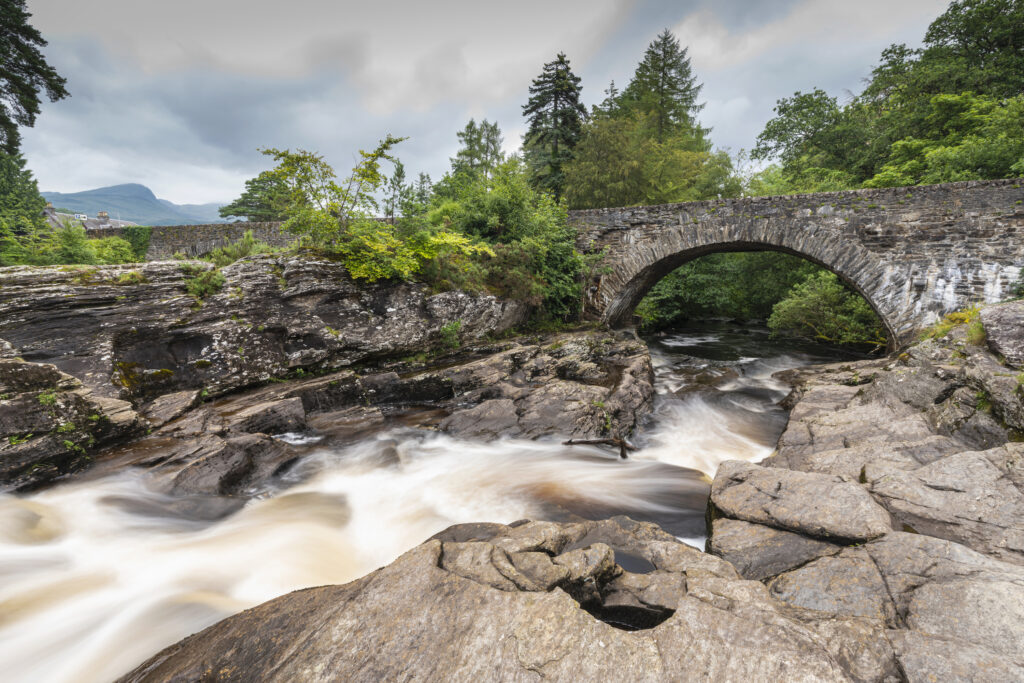
Why visit? This bridge sits at the heart of one of Perthshire’s most photographed locations – over the Falls of Dochart and close to the historic MacNab Burial Ground.
The Bridge of Dochart is one of Scotland’s most picturesque historic bridges, crossing the rushing Falls of Dochart in the heart of the village of Killin. Built from local stone, its distinctive winding shape follows the natural rocks beneath, creating a bridge that blends beautifully into the landscape rather than cutting across it.
Although parts of the bridge date back to the 18th and early 19th centuries, it has stood the test of time and remains a remarkable example of traditional Scottish engineering. With its four graceful arches spanning the tumbling river, it’s easy to see why the bridge has inspired artists, writers and visitors for generations.
Whether you’re stopping to admire the powerful waterfalls or simply soaking up the scenery, the Bridge of Dochart is a must-visit landmark that perfectly combines history, engineering and natural beauty.
Coldstream Bridge
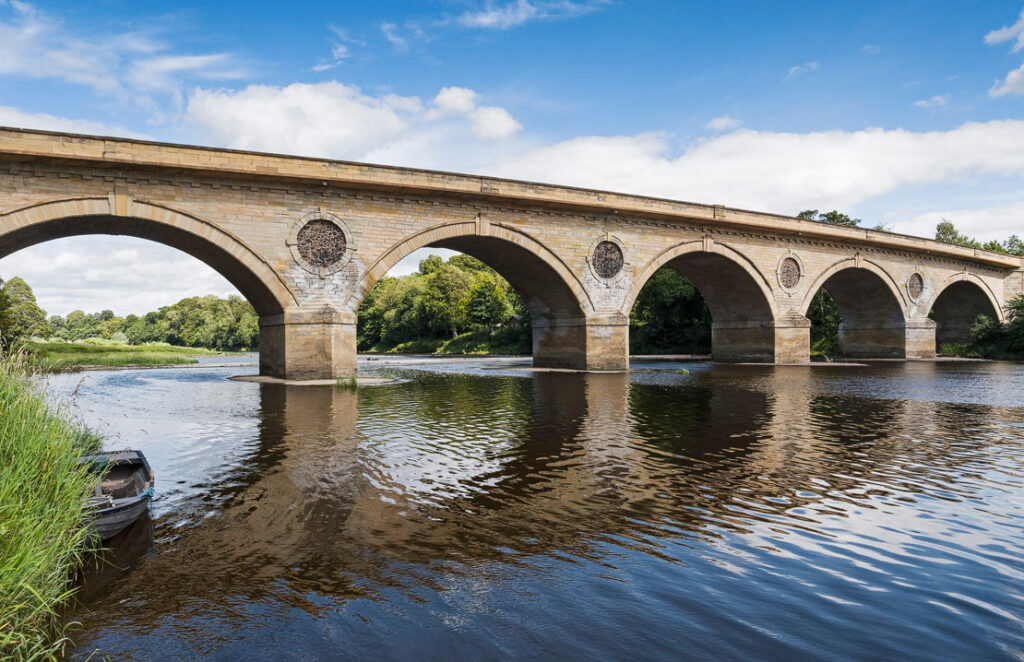
Why visit? For centuries, Coldstream stood on the frontline of history, witnessing Scottish and English armies pass through on their way to battle.
This seven-arched bridge crosses the River Tweed, connects Scotland and England. Before it was completed in 1767, travellers had to cross the river by ford.
One of the most famous crossings took place in 1513, when the Scottish army, led by King James IV, marched towards Flodden Field to face the English forces under the Earl of Surrey. The battle ended in a devastating defeat for Scotland, with around 10,000 Scots killed, including the king and many of the country’s leading nobles.
Coldstream’s position beside the English border also made it popular with eloping couples. Many crossed into Scotland to marry in secret at the tollhouse just beyond the bridge, where Scottish marriage laws were less restrictive!
Glenfinnan Viaduct

Why visit? The Glenfinnan Viaduct is a remarkable structure extending 1,000 ft (305 m) in length, with 21 arches. Thanks to its many TV and film appearances, it is instantly recognisable!
Nestled among the dramatic Highlands near Fort William, this remarkable railway bridge curves gracefully across the valley with 21 concrete arches, creating one of the country’s most iconic views. Completed in 1901, it was an impressive feat of engineering for its time and remains part of the scenic West Highland Line.
Today, it’s best known as the route taken by the Jacobite Steam Train – made famous as the Hogwarts Express in the Harry Potter films – drawing thousands of visitors each year. Whether you’re watching the steam train cross the viaduct or admiring it from the viewpoint below, the Glenfinnan Viaduct is a perfect blend of Scottish history, engineering and breathtaking scenery.
Sligachan Old Bridge
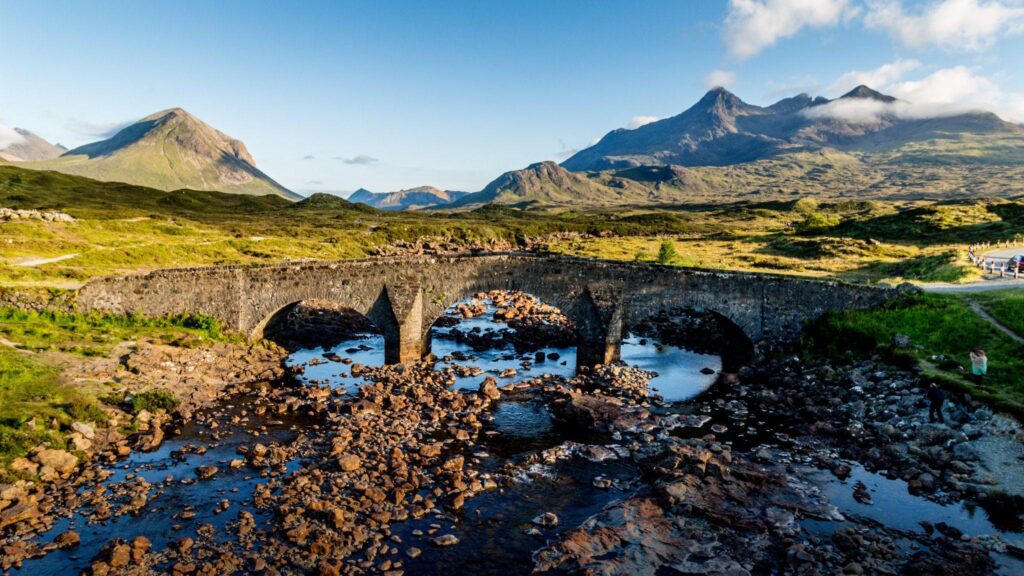
Why visit? This iconic stone bridge is considered one of the the most photographed in Scotland!
Built in the early 19th century, this graceful stone arch bridge crosses the River Sligachan with the dramatic Black Cuillin mountains rising behind it. It’s one of the most photographed locations in Scotland because of its spectacular setting. The bridge is no longer used by vehicles, so you can walk across it and enjoy some of the finest mountain views on the island.
The bridge is also wrapped in local legend. According to folklore, if you dip your face into the icy waters beneath the bridge and let it dry naturally, you’ll be granted eternal beauty. The story comes from a tale involving the warrior woman Scáthach, who is said to have trained legendary Celtic heroes on Skye.
Rumbling Bridge
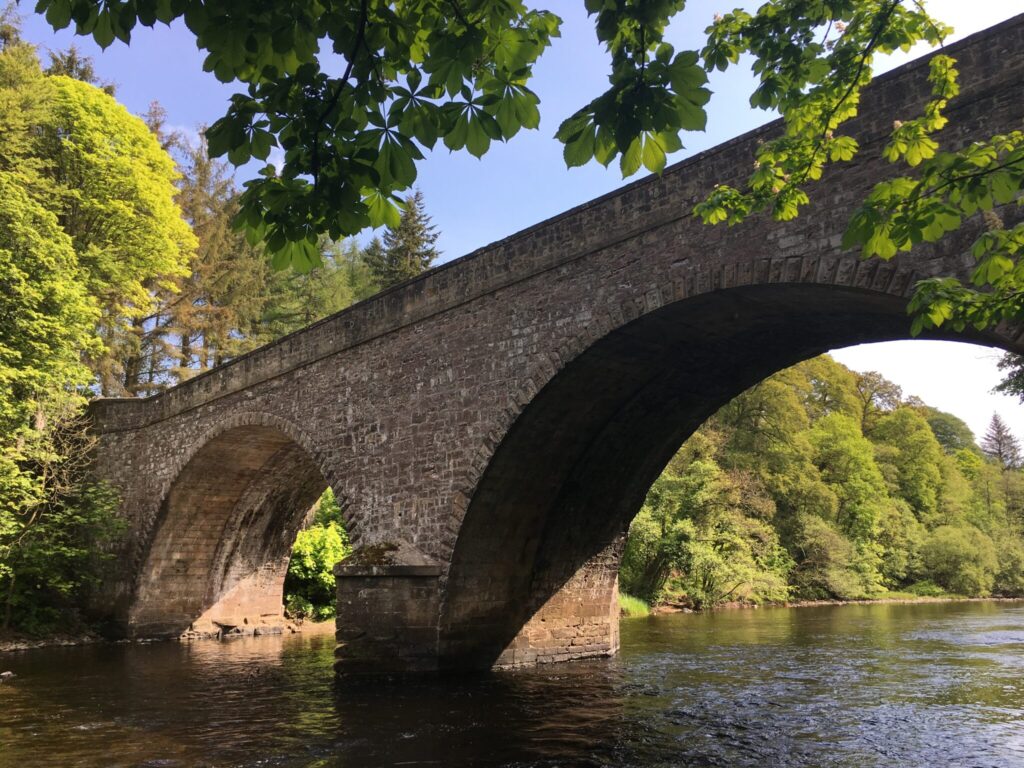
Why visit? The name comes from the sounds of the rushing of water, which produces a sound similar to the “machinery of a mill in motion”.
Rumbling Bridge, the double bridge which gives its name to the village , which is a small village built on both side of a gorge of the River Devon, which formed the boundary between the historic counties of Perthshire and Kinross-shire, Scotland
The “lower” bridge, without parapets, was built in 1713 by William Gray, a mason from Saline. It is 22 feet (6.7 meters) long, 11 ft (3.4 m) wide, and 86 ft (26 m) above the average water level.
The second bridge or Upper Arch (120 feet or 37 meters above the river) was constructed 34 feet (10 meters) above it in 1816 and “gave it an easier gradient” by removing the steep slope down to the old bridge.
Sligachan Old Bridge
Why visit? This iconic stone bridge is considered one of the the most photographed in Scotland!
Doune Bridge is a historic structure in the village of Doune, Scotland, best known for its association with Doune Castle. The bridge over the River Teith was constructed in 1535 by Robert Spittal, likely replacing an older crossing or ferry at the same location.
The bridge is part of the scenic setting around Doune Castle, a 14th-century fortress that served as the seat of Robert Stewart, the 1st Duke of Albany and Governor of Scotland. The area is also famous for being a filming location, most notably for Monty Python and the Holy Grail en.wikipedia.org.
The bridges in Scotland are far more than just a way to cross water – they are landmarks that tell the story of the country’s battles, trade, engineering achievements and changing way of life. From medieval stone crossings to world-famous feats of engineering, Scotland’s bridges have shaped how people travelled, traded and connected with one another.